
Congratulations! You’ve cracked CAT/XAT/SNAP and aced the GDPI. Your admission to a premier B-school like IIM, XLRI, FMS, SIBM, MDI, or NMIMS is confirmed. But hold on—your journey has just begun!
While most students are obsessed with entrance exams and interviews, very few talk about what happens after you step onto campus. The real MBA experience isn’t just about case studies and exams—it’s about the clubs, committees, competitions, and events that shape you into an industry-ready professional.
Here is your B-School Joining toolkit. This comprehensive guide will walk you through everything you need to know about maximising your B-school experience from day one.
Why Clubs & Committees Matter More Than You Think
Think of your MBA program as an iceberg. What you see—lectures, exams, placements—is just the tip. The massive value lies beneath: clubs, committees, and co-curricular activities. Here’s why they’re crucial:
- For Your Career: Recruiters don’t just look at your grades. They want to see leadership, teamwork, and initiative. Heading to a marketing club or organising a national-level fest shows you can manage real-world challenges.
- For Your Network: The senior managing the finance club today might be your future colleague at Goldman Sachs. The peer you compete with in a case study competition could become your co-founder. B-school clubs create lifelong professional networks.
- For Your Skills: Want to learn digital marketing? Join the marketing club. Interested in consulting? The consulting club hosts workshops with BCG and McKinsey partners. These clubs offer learning that complements your curriculum.
- For Your Resume: “Managed a team of 30 students to organise a ₹50 lakh budget fest with 1000+ participants from 50 B-schools”—now that’s a conversation starter in your placement interview!
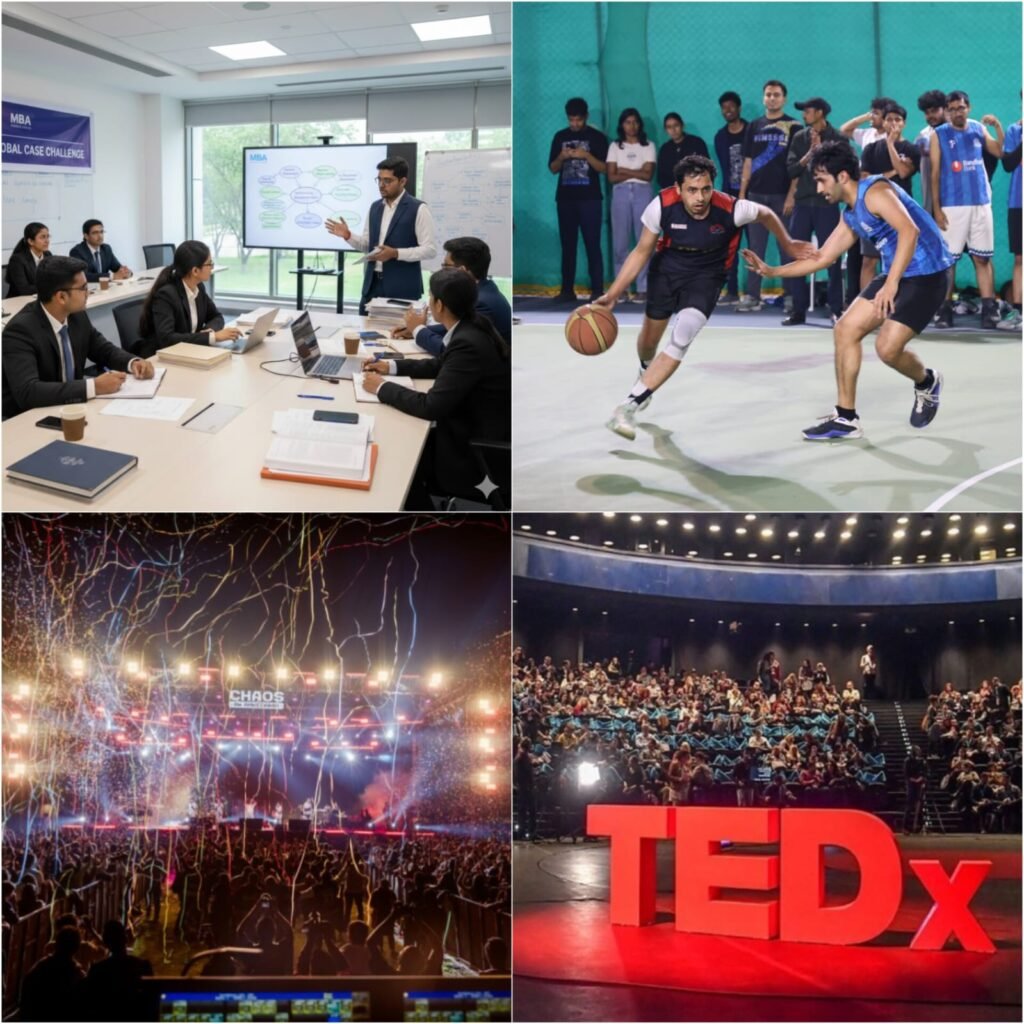
Decoding the Club Ecosystem at Tier 1 & 2 B-Schools
Every B-school has a unique club structure, but most follow similar patterns. Here’s a breakdown of what you’ll typically find:
- Academic & Domain Clubs
These are domain-specific clubs aligned with career functions:
- Finance Clubs (FINAX at XLRI, Fin Street at various IIMs): These clubs organise stock market simulations, guest lectures from CXOs of financial institutions, workshops on financial modelling, and competitions like equity research challenges. If investment banking or private equity is your goal, then this is your home base.
- Marketing Clubs (MAXI at XLRI, MarX at IIM Nagpur): From organizing marketing conclaves to conducting live market research projects, these clubs help you understand consumer behavior and brand strategy. The legendary MAXI Fair at XLRI is a prime example where students run actual business simulations.
- Consulting & Strategy Clubs (CRUX at XLRI, Consulere at IIMs): These clubs bring consulting firms to campus, conduct case study workshops, and help you prepare for consulting interviews. Many organize consulting case competitions with real-world business problems.
- Operations Clubs (OPEX at IIM Nagpur, SCM forums at IIM Mumbai/NITIE): Given India’s manufacturing and supply chain boom, these clubs organise factory visits, supply chain simulations, and competitions. Perfect for those interested in operations management.
- HR Clubs (SAPPHIRE at XLRI, HR forums at SIBM): These clubs focus on organizational behavior, talent management, and people’s analytics. They organize HR conclaves, workshops on recruitment strategies, and connect students with HR leaders.
- Entrepreneurship Cells (E-Cell at most campuses): If you have a startup idea, then this is where you’ll find mentorship, funding opportunities, and like-minded innovators. Many E-Cells run incubation programs and pitch competitions.
- Analytics & Technology Clubs (TechnoSpark at IIM Sambalpur, Product Management Clubs): With data science and product management roles exploding, these clubs organize Python/R workshops, AI/ML sessions, and product case competitions.
- Economics & Public Policy Clubs (Athena at IIM Nagpur): For those interested in economic research, policy consulting, or think tanks, these clubs discuss macroeconomic trends, policy reforms, and their business implications.
- Cultural & Social Committees
- Cultural Committees: Organize annual cultural fests, dance and music competitions, and celebrate festivals. These committees are responsible for bringing the campus alive with entertainment.
- Media & PR Cells: Handle all campus communications, social media, newsletters, and external media relations. If you’re interested in content creation, journalism, or corporate communications, then this is your space.
- Literary & Debating Societies (Sahityam at IIM Sambalpur): Book clubs, poetry sessions, creative writing competitions, debates, and quizzes. Perfect for those who love the written and spoken word.
- Social Responsibility & NGO Cells (SIGMA at XLRI): These committees work on social projects, rural immersion programs, and NGO partnerships. They not only help you give back to the community but also develop essential project management skills.
- Administrative & Functional Committees
- Placement Committee: Arguably the most critical committee—they bring recruiters to campus, coordinate the entire placement process, and prepare students through mock interviews and CV building sessions.
- Alumni Relations Committee: Organizes alumni meets, maintains the alumni database, and coordinates networking events. This committee builds the bridge between current students and the alumni network.
- Sports Committee: Manages all sports activities, inter-college tournaments, and fitness events. From cricket to chess, basketball to badminton, the sports committee keeps you physically active.
- Student Council/SAC (Student Affairs Committee): The apex governing body managing budgets, coordinating between clubs, and acting as the bridge between students and administration.
- IT/Tech Committee (Agile at IIM Ahmedabad, TechnoSpark at IIM Sambalpur): Manages campus IT infrastructure, builds apps and websites for the college, and organizes e-sports and gaming tournaments.
- Library Committee: Manages library resources, organizes book exchanges, and conducts literary events.
- Infrastructure Committee: Looks after campus facilities, maintenance, and student amenities.
Must-Know Events & Competitions at Tier 1 & 2 B-Schools
Beyond regular club activities, B-schools host massive annual events that become defining experiences of your MBA. Here are the major categories:
Annual B-School Festivals
Every top B-school has its flagship fest that attracts participants from across the country:
- Unmaad (IIM Bengaluru): One of India’s most prestigious B-school fests featuring concerts, case competitions, fashion shows, and literary events. Past performers include Vishal-Shekhar and international comedians.
- Imperium (MDI Gurgaon): One of the largest B-school fests in India, combining business competitions with cultural events.
- Solaris (IIM Udaipur): Annual management fest with competitions across all domains.
- MICANVAS (MICA Ahmedabad): India’s largest 3-day marketing festival, a must-attend for marketing enthusiasts.
- Ensemble (XLRI Jamshedpur): The flagship inter-B-school fest that tests future managers across various functional areas.
- Nova Exilaro (XLRI): Annual management, cultural, and sports fest.
- Xpressions (XIMB Bhubaneswar): Management and cultural festival.
- Purvodaya (VGSoM, IIT Kharagpur): Annual business fest featuring corporate leaders and competitions.
- Elegante (IIM Bodh Gaya): Cultural and sports fest with students from across top institutions.
- Paragana (NMIMS Mumbai): The flagship B-school festival.
- Illumina (MDI Gurgaon): Disguised market research festival celebrating 25+ years.
- Lattice (IIM Calcutta): Annual business conclave with panel discussions and case competitions.
These fests aren’t just fun—they’re massive learning experiences. You’ll manage budgets of ₹50 lakhs+, coordinate with 30+ sponsors, lead teams of 50+ volunteers, and handle logistics for 1000+ participants. That’s a real management experience.
Inter-College Competitions
B-School Case Competitions: Almost every major B-school organizes domain-specific case competitions:
- Gray Matters (IIM Calcutta)
- Marketing Crusader and Marché (IIM Nagpur)
- Various case competitions at IIM Kashipur, IIM Bodh Gaya, and other institutes
Also Read: Case Competition in B-School
Sports Fests:
- King of North (MDI Gurgaon): Premier inter-college sports fest
- MAXI Sports competitions (XLRI)
- Sports tournaments at IIM campuses
- National & International Competitions
Participation in these competitions can significantly boost your resume:
Corporate-Sponsored Competitions:
- L.I.M.E. (Hindustan Unilever): One of India’s largest marketing case competitions with ₹10 lakh cash prize. Winners get a ticket to the global Unilever case study competition.
- Amazon Customer Excellence (ACE) Challenge: Inter-college case study competition
- Mahindra War Room: Real-world case studies from M&M businesses
- Google Case Study Competitions
- Bajaj Finserv FinShiksha: Finance domain competition
- Hero MotoCorp TAS: Marketing and sales competition
- L’Oréal Brandstorm: Global marketing and innovation competition
- RBI Policy Challenge: Nationwide competition by Reserve Bank of India
Global Competitions:
- Hult Prize: The Nobel Prize for students—$1 million seed capital for social impact startups. Winners pitch at UN HQ.
- John Molson MBA International Case Competition: Oldest and largest MBA case competition (founded 1981) with 30+ teams
- CFA Institute Research Challenge: Global competition requiring company analysis and buy/sell/hold recommendations
- Venture Capital Investment Competition (VCIC): Students act as VCs evaluating startups
Domain-Specific Competitions:
- New Venture Challenge (Chicago Booth, Harvard): Startup pitch competitions with $75,000-$315,000 in prizes
- Human Capital Case Competition: For HR and anisational behaviour enthusiasts
- Renewable Energy Case Competition (Michigan Ross): For cleantech careers
- Data4Good Case Competition: Using analytics and AI for social impact
- Net Impact Case Competition: Tackling global sustainability issues
- Marketing Case Competition (Chicago Booth Kilts Center): Using Nielsen data for brand management
- Supply Chain Case Competitions: Testing innovation in supply chain management
Finance & Investment Competitions:
- McGill International Portfolio Challenge: $50,000 prizes for portfolio design and asset management
- AstraZeneca Healthcare Case Competition: Biggest healthcare business school competition
- Private Equity Challenges: For those interested in PE and M&A
Most of these competitions offer:
- Cash prizes ranging from ₹50,000 to $1 million
- Pre-placement interview/offer opportunities
- Networking with industry leaders
- International exposure
- Resume building and skill development
Strategic Guide: Choosing the Right Clubs & Committees
With 20+ clubs and committees at most B-schools, you can’t join everything. Here’s how to choose strategically:
For First Year (Year 1):
- Join 2-3 clubs as a member: Pick one domain club aligned with your career goal (e.g., finance club if you want IB), one skill-building club (e.g., consulting club), and one interest-based club (e.g., photography or literary club).
- Participate actively: Attend workshops, volunteer for events, compete in case studies. Build your reputation.
- Network with seniors: The seniors running these clubs will mentor you, help with placements, and potentially hand over leadership positions.
For Second Year (Year 2):
- Lead 1-2 clubs: By now, you should aim for leadership positions—President, Vice President, or Secretary of a club. This is what goes on your resume.
- Organize major events: Take responsibility for organizing fest events, guest lectures, or competitions. This demonstrates large-scale project management.
- Build your portfolio: Document everything—budgets managed, teams led, events organized, participants reached. Numbers matter in interviews.
Pro Tips:
- Quality over quantity: One leadership position in a major club is better than being a passive member in five clubs.
- Align with career goals: If you want consulting, lead the consulting club. If you want product management, join the tech/analytics club.
- Balance academics and extra-curriculars: Don’t let club activities harm your grades. Recruiters look at both.
- Think long-term: The connections you make in clubs often matter more than the activities themselves.
Lesser-Known Opportunities You Shouldn’t Miss
Beyond clubs and competitions, here are some unique opportunities at top B-schools:
Conferences & Conclaves
- Lattice (IIM Calcutta): Annual business conclave with industry stalwarts
- ICMC (MICA): International Communication Management Conference
- TEDx events: Many IIMs and top B-schools host TEDx events—speaking or organizing can be transformative
- Leadership Talk Series (Netratva at IIM Udaipur): Direct interaction with business leaders
Research & Publications
- Student-run magazines and newsletters: Media cells publish quarterly magazines
- Research competitions: Writing original case studies for publication
- Blogs and podcasts: Psychology committees, marketing clubs run content platforms
Specialized Programs
- Village Exposure Programme (XLRI): Develop social awareness through rural immersion
- International exchange programs: Many B-schools have tie-ups with foreign universities
- Incubation centers: IIM Udaipur, IIM Mumbai, and others have startup incubation programs
- MOU partnerships: Centers for Digital Enterprise, Consumer Culture Labs, etc.
Certifications & Workshops
Clubs often sponsor certifications:
- CFA prep workshops
- Financial modeling certifications
- Digital marketing certifications
- Product management boot camps
- Python/R programming workshops
Student Exchange Programs: Your Passport to Global Learning
One of the most transformative experiences at tier 1 & 2 B-schools is the opportunity to study abroad through student exchange programs. These programs allow you to spend one term (typically Term 5 in Year 2) at a partner university overseas, gaining international exposure, cross-cultural perspectives, and a global network.
Why Student Exchange Matters
- Global Perspective: Understanding international business practices, consumer behavior, and management styles across cultures is invaluable in today’s globalized economy.
- Network Expansion: Build relationships with students and faculty at top international business schools—connections that could lead to international job opportunities or global collaborations.
- Resume Enhancement: International exchange experience demonstrates adaptability, cultural intelligence, and global mindset—highly valued qualities in multinational corporations.
- Academic Diversity: Access courses and specializations not available at your home campus, taught by renowned international faculty.
- Career Opportunities: Many students secure international job offers or PPOs from companies in the country where they did their exchange.
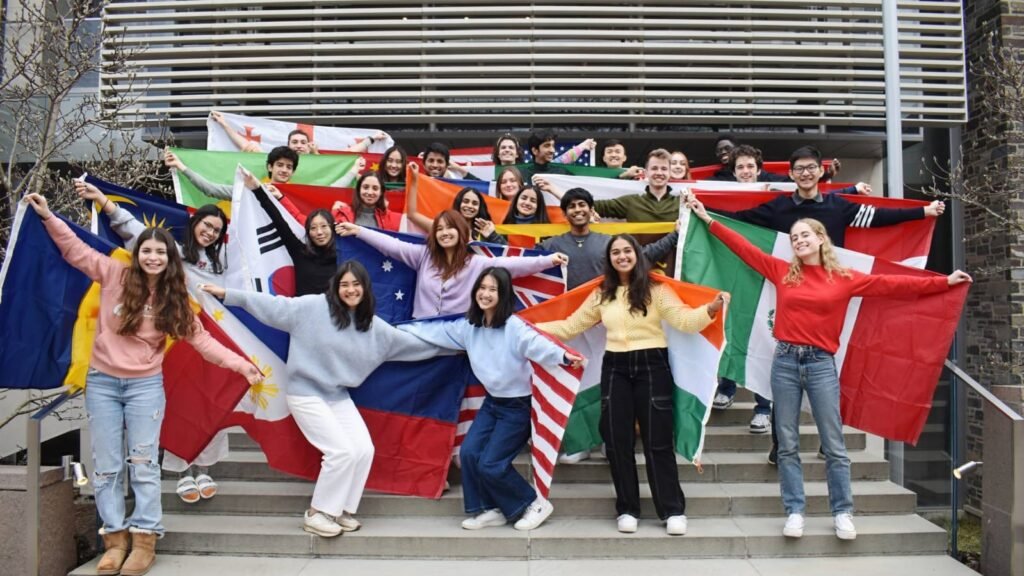
Exchange Program Details at Top B-Schools
- IIM Ahmedabad: Has one of the most vibrant exchange programs with partnerships across Europe, USA, and Asia. Notable for having ties with Ivy League MBA schools and top global business schools.
- IIM Bangalore: Nearly 40% of the batch gets the opportunity to spend a term at a partner institute. The program has expanded significantly with partnerships across continents.
- IIM Udaipur: Offers Student Term Exchange Program (STEP) during Term V. Requires minimum 2.5 GPA for participation. Students can list multiple university preferences.
- IIM Kashipur: Partners with Alba Graduate School of Business (Greece), Turiba University (Latvia), Solbridge International School of Business (South Korea). In 2024-25, facilitated long-term exchange for 9 students and short-term exchange for 31 students.
- IIM Ranchi: Has MoUs with universities in Finland, France, Greece, Latvia, Russia, South Korea, and Taiwan. Open for undergraduate, graduate and doctoral programmes.
- IIM Mumbai: Growing international exchange program as part of expanding business and industry ties.
- IIM Nagpur: Student exchange programmes with multiple foreign universities.
- XLRI Jamshedpur: Despite no direct airline connectivity, hosts close to 30 exchange students. Has 19 partner universities including prestigious institutions like Darden. Partners across Europe (France, Germany, Spain, Greece, UK), USA, and Southeast Asia. The ISEP (International Student Exchange Program) Committee is student-run and helps with cultural integration.
Partner University Regions: Most B-schools have maximum partnerships in Europe (as PGDM is considered equivalent to MSc in Management). Top IIMs like IIM A and B also have partnerships with Ivy League schools and top global MBA programs. Partnerships also exist across USA, UK, Canada, Australia, Southeast Asia, and Latin America.
How to Make the Most of Exchange Programs
- Maintain Strong GPA: Most programs require minimum CGPA (typically 2.5-3.0) for eligibility. Start building your academic record from Day 1.
- Apply Early: Exchange slots are limited and competitive. Understand the selection criteria (usually CGPA-based) and prepare your application well in advance.
- Choose Strategically: Select universities that offer specializations or courses not available at your home campus, or those in regions where you want to build your career.
- Financial Planning: While tuition is waived under exchange agreements, you’ll need to budget for travel, accommodation, living expenses, and visa costs. Many students take education loans specifically for exchange programs.
- Leverage for Placements: International exchange experience is a strong talking point in placement interviews, especially for roles in global consulting firms and multinational corporations.
Summer Internships (SIPs), PPOs, and Placement Trends: What You Need to Know
While clubs and events shape your learning, placements validate your MBA investment. Understanding the Summer Internship Process (SIP), Pre-Placement Offers (PPOs), and overall placement trends is crucial for making informed decisions about your B-school journey.
Understanding the Placement Timeline
- Summer Internship Placements (SIP): Happen in your first year, typically in September-November. This is an 8-week internship (usually in April-May of Year 1) that serves as an extended interview for a PPO.
- Pre-Placement Offers (PPO): Companies that are impressed with your summer internship performance extend PPOs—full-time job offers that you can accept before final placements. At top IIMs, 40-50% of the batch gets placed through PPOs.
- Lateral Placements: For students with 18+ months’ work experience, happens a few months before final placements.
- Final Placements: The main placement season in December-February of your second year for those without PPOs.
Why SIPs and PPOs Matter More Than Stipends
The summer internship is not a 2-month job—it’s an 8-week interview for your dream company. Here’s the strategic reality:
Most Top Jobs Come via PPO Route: At elite B-schools, 40-50% of final placements happen through PPO conversions. Top consulting and finance firms hire the majority of their final batch from summer interns.
Limited Second Chances: If you don’t intern at your dream company, getting a final placement offer becomes significantly harder. Summer placements are your best shot at top firms.
Strategic Choice Over Stipend: It’s always better to choose an internship at your dream company with a moderate stipend than a high-stipend role at a company you have no long-term interest in.
Summer Internship Stipend Trends (2024-2025)
Here’s what students can expect for 2-month summer internships:
Tier 1 IIMs (A, B, C):
- Highest Stipends: ₹4-5 lakhs (High Finance & Private Equity)
- Management Consulting (MBB, Kearney): ₹3.5-4.0 lakhs
- Average Stipend Range: ₹2.0-2.5 lakhs per month
- IIM Ahmedabad 2024-25: 100% placement, 51 new companies (up from 12 in 2023)
- IIM Bangalore 2024-25: 601 offers for 606 students, highest offers from Accenture Strategy and BCG
- IIM Indore: Highest stipend ₹5 lakhs (2-month), Average ₹2.53 lakhs (up from ₹2.25 lakhs)
Other Top B-Schools:
- XLRI Jamshedpur 2024-26:
- 100% placement for 583 students across 114 companies (28 new recruiters)
- Highest stipend: ₹3.5 lakhs per month (BFSI sector – JPMC)
- Average: ₹1.6 lakhs per month, Median: ₹1.55 lakhs per month
- 84% offers above ₹1 LPM, 64% at or above ₹1.5 LPM
- MDI Gurgaon 2024-26:
- 98 companies participated (42 new recruiters)
- Batch: 313 PGDM, 124 PGDM HRM, 32 PGDM BA
- SIBM Pune 2024-26:
- Previous highest stipend: ₹4 lakhs
- FMS Delhi:
- Average stipend: ₹3.02 lakhs for 2 months (13% increase)
Top Sectors for Summer Internships:
- Management Consulting: BCG, Bain, McKinsey, Accenture Strategy, EY Parthenon, Kearney
- Investment Banking & Finance: Goldman Sachs, JP Morgan, Morgan Stanley, Avendus Capital, Rothschild & Co.
- Private Equity/VC: Multiples, Premji Invest, WinZO Fund, WhiteOak Capital
- FMCG: HUL, P&G, ITC, Marico, Nestle, Coca-Cola
- Conglomerates: Aditya Birla Group, Tata Administrative Services, Mahindra Group
Final Placement Trends (2023-2025)
IIM Ahmedabad PGP 2025:
- Highest Package: ₹1.15 crore (domestic)
- Average Package: ₹34.36 lakh
- 100% placement: 395 students placed out of 406 eligible (11 opted out)
- Top Recruiters: BCG (35 offers including PPOs), Accenture Strategy (31 offers), Bain & Co (17 offers)
- 178 firms participated with 261 different roles
IIM Bangalore 2023:
- Highest Package: ₹1.15 crore
- Average Package: ₹35.31 lakh (4.4% increase)
- 606 offers including 22 international offers
- 100% placement rate
IIM Indore 2025:
- Highest Package: ₹70 lakh (down from ₹1 crore in 2024)
- Average Package: Data awaited
- Top Sectors: Consulting & Finance (49% of batch)
- Top Recruiters: EY, GEP Worldwide, Bank of America, Barclays, Adani
IIM Mumbai 2025:
- Highest Package: ₹54 lakh
- Average Package: ₹29.44 lakh
- Median Package: ₹28 lakh
- 100% placement: 180 companies participated
- 170 PPOs offered
- Median PPO Package: ₹28 lakh
XLRI Jamshedpur 2025:
- Highest Package: ₹75 lakh (up ₹21.47 lakh from 2024)
- Average Package: ₹28.68-29.88 lakh (up ₹1.61 lakh from 2024)
- Median Package: ₹27.63 lakh
- 100% placement
- Top Recruiters: Aditya Birla Group, Amazon, Bain & Company, BCG, Microsoft, P&G
FMS Delhi 2023:
- Highest Package: ₹123 lakh (often highest among Indian B-schools)
- Average Package: ₹34 lakh
- 100% placement
- Best value for money (low fees, high packages)
SIBM Pune 2025:
- Highest Package: ₹53.58 lakh
- Average Package: ₹28.83 lakh
- Median Package: ₹26.04 lakh
- 98 PPOs through summer internships and live projects
- 109 recruiters participated
MDI Gurgaon:
- Known for corporate location advantage in Delhi-NCR
- Strong presence in consulting, finance, and general management
Domain-Wise Placement Insights
Consulting (30-40% of batch at top B-schools):
- Highest number of offers across all IIMs
- Top firms: BCG, Bain, McKinsey, Accenture Strategy, EY, Deloitte, PwC
- Packages: ₹25-40 lakh average, up to ₹1 crore+ for international roles
Finance & Investment Banking (15-25%):
- Second-largest hiring sector
- Top firms: Goldman Sachs, JP Morgan, Morgan Stanley, Citibank, HSBC
- Packages: ₹30-50 lakh average, highest up to ₹70-80 lakh
General Management (10-15%):
- Roles in conglomerates and large corporations
- Top recruiters: TAS, Aditya Birla Group, Reliance, Mahindra
- Packages: ₹25-35 lakh
Sales & Marketing (15-20%):
- FMCG companies dominate
- Top recruiters: HUL, P&G, ITC, Marico, Asian Paints
- Packages: ₹20-30 lakh
Product Management & Tech (Growing sector, 10-15%):
- Amazon, Microsoft, Flipkart, Google
- Packages: ₹30-50 lakh
Operations & Supply Chain (5-10%):
- Manufacturing and logistics companies
- Packages: ₹18-28 lakh

Key Placement Trends to Watch
1. Rise in Consulting Offers: Consulting continues to be the largest recruiter, with firms expanding their hiring from top B-schools.
2. New Company Participation: IIM Ahmedabad saw 51 new companies in 2024 (up from 12 in 2023), indicating expanding recruiter base despite economic uncertainties.
3. PPO Growth: More companies are offering PPOs, making summer internships increasingly critical.
4. Sector Diversification: Beyond traditional consulting and finance, sectors like Product Management, Sustainability, Analytics, and E-commerce are growing.
5. International Offers: While fewer than domestic offers, international placements continue with packages often higher than domestic averages (₹32+ lakh).
6. Salary Stability: Despite economic headwinds, top B-schools maintain salary levels with modest increases year-over-year.
How to Maximize Your Placement Success
Year 1 Focus:
- Build Strong CGPA: Most companies have CGPA cutoffs (7.0-8.0 on 10-point scale)
- Network Aggressively: Connect with alumni in your target companies
- Develop Domain Expertise: Join relevant clubs, participate in case competitions
- Prepare Early: Start CV building and interview prep from Day 1
Summer Internship Strategy:
- Research Companies Thoroughly: Know what you’re applying for
- Target Wisely: Apply to companies where you genuinely want to work
- Perform Exceptionally: Your 8 weeks determine your PPO chances
- Build Relationships: Network with managers and teams during internship
PPO Conversion Tips:
- Exceed Expectations: Deliver beyond assigned tasks
- Ask for Feedback: Show eagerness to learn and improve
- Be Professional: Punctuality, communication, and attitude matter
- Follow Up: Stay connected with your team after internship
Final Placement Preparation (if no PPO):
- Strengthen Weaknesses: Use Year 2 to improve skills identified during SIP
- Diversify Applications: Apply broadly while targeting dream companies
- Mock Interviews: Practice extensively with seniors and placement committee
- Stay Positive: Many students without PPOs land excellent final placements
Crafting a Winning MBA Resume: Your Secret Weapon for Placements
Your resume is not just a document—it’s your personal marketing brochure. In the high-stakes world of MBA placements, where hundreds of students compete for the same consulting or finance role, your CV needs to stand out in the 6-7 seconds a recruiter spends reviewing it. More importantly, it needs to pass through Applicant Tracking Systems (ATS) that 99% of Fortune 500 companies use to filter candidates.
Here’s your comprehensive guide to building a resume that gets you selected.
Understanding the MBA Resume vs. Traditional Resume
An MBA resume is fundamentally different from a traditional job resume:
Focus on Leadership & Impact: MBA resumes emphasize leadership roles, team management, and quantifiable business impact rather than just job responsibilities.
Achievements Over Duties: Instead of “Managed marketing campaigns,” write “Led cross-functional team of 8 to execute digital marketing campaign, increasing customer acquisition by 30% and generating ₹50 lakh in revenue.”
International & Cross-Functional Experience: Highlight any global exposure, cross-cultural work, or diverse functional experience.
Brevity & Precision: MBA resumes must be exactly 1 page (for candidates with less than 4 years of experience) or maximum 2 pages (for experienced professionals with 8+ years). Every word must add value.
Skills Alignment: Your resume should showcase MBA-relevant competencies: leadership, teamwork, analytical thinking, communication, innovation, and global mindset.
The Perfect MBA Resume Structure
Here’s the proven format that works across all B-schools and companies:
“MBA_Resume_Structure_Guide.pdf”
Power of Numbers:
Every achievement should include quantifiable metrics:
- Revenue impact: “Generated ₹X revenue”
- Cost savings: “Reduced costs by X%”
- Efficiency gains: “Improved process efficiency by X%”
- Team size: “Led team of X people”
- Scale: “Managed portfolio worth ₹X crore”
- Growth: “Increased sales/users/engagement by X%”
- Time: “Delivered project 2 months ahead of schedule”
Action Verbs to Use:
Instead of passive language, use powerful action verbs:
- Leadership: Led, Directed, Spearheaded, Orchestrated, Championed, Pioneered
- Achievement: Achieved, Delivered, Exceeded, Surpassed, Secured, Attained
- Innovation: Developed, Designed, Created, Launched, Implemented, Introduced
- Analysis: Analyzed, Evaluated, Assessed, Researched, Investigated, Identified
- Improvement: Optimized, Streamlined, Enhanced, Transformed, Revamped, Upgraded
- Collaboration: Collaborated, Partnered, Coordinated, Facilitated, Aligned
CV Speak – Word Economy Rules:
MBA resumes use concise “CV speak” to maximize space:
❌ Don’t Write: “I was responsible for the management of the company’s largest sales territory” ✅ Write: “Managed company’s largest sales territory”
❌ Don’t Write: “Successfully completed a project that was worth $1 million” ✅ Write: “Delivered $1 million project ahead of schedule”
The HR Test: Can a non-technical HR person understand your achievement? Avoid industry jargon, acronyms, and technical terms. If you must use them, explain briefly.
❌ Don’t Write: “Quarterbacked workstreams for ideation phase of GTM strategy” ✅ Write: “Led go-to-market strategy development for new product line”
Critical Resume Mistakes to Avoid
1. Generic, One-Size-Fits-All Resume
- Mistake: Using the same resume for consulting, finance, and marketing roles
- Fix: Customize your resume for each role. Emphasize analytical skills for consulting, financial acumen for banking, creativity for marketing.
2. Listing Responsibilities Instead of Achievements
- Mistake: “Responsible for managing social media accounts”
- Fix: “Grew Instagram following from 10K to 100K in 6 months, increasing engagement rate by 250%”
3. No Quantifiable Metrics
- Mistake: “Improved sales performance significantly”
- Fix: “Increased regional sales by 42% YoY, generating ₹8 crore incremental revenue”
4. Poor Formatting & Readability
- Mistake: Fancy fonts, colors, tables, images, multiple columns
- Fix: Clean, professional format with standard fonts (Arial, Calibri, Times New Roman), black text, clear section headers, consistent bullet points
5. Typos and Grammatical Errors
- Mistake: “Managed team of 10 peoples and achieving great results”
- Fix: Use grammar checkers, proofread multiple times, have 2-3 people review your resume
6. Including Irrelevant Information
- Mistake: Listing hobbies like “watching movies,” including photo, mentioning marital status
- Fix: Only include information that enhances your candidacy. In India, photos are generally not required for corporate jobs.
7. Weak Language & Passive Voice
- Mistake: “Was involved in the project which resulted in improvements”
- Fix: “Led project team to deliver 30% efficiency improvement”
8. Overcrowding the Page
- Mistake: Tiny fonts, no white space, cramming too much information
- Fix: Use 10-12 pt font, adequate margins (0.5-1 inch), white space between sections
Resume Formatting Best Practices
Font & Size:
- Use professional fonts: Calibri, Arial, Times New Roman, or Georgia
- Font size: 10-12pt for body text, 14-16pt for your name
- Consistent formatting throughout
Margins & Spacing:
- Margins: 0.5-1 inch on all sides
- Line spacing: 1.0-1.15
- Clear spacing between sections
File Format:
- Save as PDF to preserve formatting
- File name: “FirstName_LastName_MBA_Resume.pdf”
- Some ATS systems accept .docx, but PDF is safer
Length:
- 1 page for candidates with 0-4 years of experience
- 2 pages maximum for 5+ years of experience
- Every line must add value—be ruthless in editing
ATS-Friendly Formatting:
- No tables, text boxes, headers/footers, or columns
- No images, graphics, or fancy design elements
- Use standard section headings: “Work Experience,” “Education,” “Skills”
- Avoid abbreviations in section headings
Leveraging AI CV Checker Tools: Your Resume’s Quality Control
In 2025, Applicant Tracking Systems (ATS) screen 75% of resumes before they reach human recruiters. Even if you’re perfectly qualified, poor formatting or missing keywords can get your resume rejected automatically. This is where AI CV checker tools become game-changers.
What is an ATS and Why Should You Care?
Applicant Tracking System (ATS) is software used by 99% of Fortune 500 companies and most B-school recruiters to:
- Automatically scan and parse resumes
- Extract key information (name, education, skills, experience)
- Filter candidates based on keywords and criteria
- Rank resumes by match percentage
- Present only top-scoring resumes to recruiters
The Reality: If your resume isn’t ATS-friendly, you might never get past the first screening—regardless of your qualifications.
Common ATS Failures:
- Resume formatted with tables → ATS can’t parse information
- Using creative section headings like “My Journey” instead of “Work Experience” → ATS doesn’t recognize sections
- Missing keywords from job description → Resume scores poorly and gets filtered out
- Image-based resume or non-standard fonts → ATS can’t read text
Top AI Resume Checker Tools (Free & Paid)
Here are the best tools to optimize your MBA resume:
1. Jobscan (www.jobscan.co)
What it does: Compares your resume against specific job descriptions and gives a match rate score.
2. Resume Worded (www.resumeworded.com/score)
What it does: Free resume grading with AI-powered feedback.
3. Enhancv Resume Checker (www.enhancv.com/resources/resume-checker)
What it does: Free ATS checker powered by AI and 2 million resume database.
4. Resume.io ATS Checker (www.resume.io/ats-resume-checker)
What it does: Two-step AI analysis—completeness check + job match scoring.
5. AIApply Resume Checker (www.aiapply.co/ai-resume-checker)
What it does: Comprehensive AI analysis for ATS optimization.
6. ResumeUp.AI (www.resumeup.ai)
What it does: Real-time ATS scoring while you build your resume.
7. KudosWall Resume Checker (www.kudoswall.com)
What it does: Instant ATS score out of 100 with no signup required.
How to Use CV Checker Tools Effectively: Step-by-Step Guide
Step 1: Create Your Base Resume
- Follow the MBA resume structure outlined earlier
- Include all your experiences, achievements, and skills
- Save as PDF and DOCX versions
Step 2: Run a General ATS Check
- Use Resume Worded or Enhancv for initial screening
- Check your baseline score (typically 40-60% for first draft)
- Identify major formatting issues
- Fix: Replace tables with simple lists, use standard fonts, remove graphics
Step 3: Customize for Each Job Application
- Find the job description for the role you want (Consulting at BCG, Product Manager at Amazon, etc.)
- Copy the entire job description
- Use Jobscan to compare your resume against this specific job
Step 4: Optimize for Keywords
- Review the “missing keywords” report from Jobscan
- Identify critical skills and qualifications mentioned in job description
- Naturally incorporate these keywords into your resume (don’t keyword-stuff!)
- Examples: If job description mentions “stakeholder management,” ensure your resume includes this phrase in context
Step 5: Achieve 75%+ Match Rate
- Re-scan your resume after incorporating keywords
- Aim for 75% or higher match rate
- If below 75%, continue refining
- Balance: Don’t over-optimize to 95%—it looks unnatural and might lack authenticity
Step 6: Multiple Tool Verification
- Don’t rely on just one tool
- Cross-check with 2-3 different ATS checkers
- Each tool uses slightly different algorithms
- If all tools give you 70%+ scores, you’re good to go
Step 7: Human Review
- After ATS optimization, have a human review your resume
- Ask seniors, placement committee members, or alumni
- Ensure the resume still reads naturally and tells your story
- Balance ATS optimization with human readability
Pro Tips for Using AI Resume Checkers
1. Don’t Over-Optimize
- Aim for 75-80% match, not 100%
- Your resume should be authentic, not keyword-stuffed
- Recruiters can spot over-optimized resumes that lack genuine achievements
2. Customize for Each Application
- NEVER send the same resume to all companies
- Customize keywords, skills emphasis, and even achievement framing for each role
- Consulting resume should emphasize problem-solving and analytics
- Marketing resume should highlight creativity and brand impact
- Finance resume should focus on quantitative skills and financial modeling
3. Quality Over Quantity
- Better to send 10 highly customized resumes than 50 generic ones
- Each application should have resume tailored to that specific job description
4. Update Regularly
- As you gain new experiences (case competitions, projects, club activities), update your resume
- Re-scan after major updates
- Keep multiple versions for different roles
5. Combine AI with Human Intelligence
- AI tools catch technical issues (formatting, keywords)
- Humans catch storytelling, impact, and authenticity issues
- Use both for best results
Common ATS Optimization Mistakes
1: Keyword Stuffing
- Don’t: Add a white text section with all job description keywords
- Do: Naturally integrate keywords into your actual achievements
2: Ignoring Context
- Don’t: Just add keywords randomly—”Python” without showing where/how you used it
- Do: “Developed Python-based sales forecasting model, improving accuracy by 25%”
3: Sacrificing Readability
- Don’t: Create a resume that scores 90% on ATS but is unreadable by humans
- Do: Balance ATS score with compelling storytelling
4: Using Only One Job Description
- Don’t: Optimize for one generic consulting job description
- Do: Tailor resume for each company—BCG looks for different signals than Deloitte
Final Resume Checklist Before Submission
Before you hit “Submit” on any job application, run through this checklist:
Content Checklist:
- ✅ Resume is 1 page (or 2 pages max if 8+ years experience)
- ✅ Every bullet point includes quantifiable achievements
- ✅ Used strong action verbs (Led, Spearheaded, Delivered)
- ✅ No spelling or grammatical errors
- ✅ All dates and numbers are accurate
- ✅ Contact information is current and professional
ATS Checklist:
- ✅ Scanned through AI resume checker (75%+ match rate)
- ✅ Standard section headings (Work Experience, Education, Skills)
- ✅ No tables, columns, headers, footers, or text boxes
- ✅ Standard font (Arial, Calibri, Times New Roman)
- ✅ Keywords from job description incorporated naturally
- ✅ File saved as PDF with proper naming (FirstName_LastName_Resume.pdf)
Human Review Checklist:
- ✅ Resume reviewed by at least 2 people (senior/placement committee/alumni)
- ✅ Tells a coherent career story
- ✅ Tailored to specific company and role
- ✅ Highlights relevant skills and experiences for this job
- ✅ Reads naturally, not like a keyword dump
Resume Strategy for Different B-School Career Tracks
For Consulting Roles:
- Emphasize: Problem-solving, data analysis, client management, strategic thinking
- Keywords: Strategic planning, stakeholder management, market analysis, project management, process optimization
- Highlight: Case competition wins, consulting club leadership, analytical projects
- Quantify: Impact on business metrics, efficiency gains, revenue growth
Finance/Investment Banking Roles:
- Emphasize: Financial modeling, quantitative analysis, deal execution, financial acumen
- Keywords: Financial modeling, valuation, M&A, equity research, portfolio management, DCF, LBO
- Highlight: Finance certifications (CFA, FRM), finance club activities, quantitative projects
- Quantify: Deal sizes, portfolio performance, financial impact
For Marketing/Brand Management Roles:
- Emphasize: Brand strategy, consumer insights, campaign management, creativity
- Keywords: Brand positioning, market research, digital marketing, consumer behavior, ROI optimization
- Highlight: Marketing competitions, brand projects, creative campaigns, market research
- Quantify: Campaign ROI, market share growth, customer acquisition, engagement metrics
Product Management Roles:
- Emphasize: User-centric thinking, technical skills, cross-functional collaboration
- Keywords: Product roadmap, user research, agile, A/B testing, data-driven decision making
- Highlight: Tech projects, product case competitions, coding skills, analytics
- Quantify: User growth, feature adoption, product metrics, business impact
Operations/Supply Chain Roles:
- Emphasize: Process optimization, efficiency improvement, logistics management
- Keywords: Supply chain optimization, inventory management, lean manufacturing, Six Sigma, operations strategy
- Highlight: Operations projects, factory visits, process improvements
- Quantify: Cost savings, efficiency gains, cycle time reduction, quality improvements
Common Mistakes to Avoid
Mistake 1: Joining too many clubs: You’ll spread yourself thin and not make an impact anywhere. Focus on 2-3 clubs maximum.
Mistake 2: Only joining for resume: Recruiters can spot fake involvement. Join clubs you’re genuinely interested in.
Mistake 3: Ignoring Year 1 opportunities: Many students think “I’ll get involved next year.” By then, leadership positions are already filled.
Mistake 4: Not documenting your work: Keep track of event budgets, team sizes, participant numbers, and outcomes. You’ll need these for interview stories.
Mistake 5: Neglecting academics for clubs: Balance is key. A 2-pointer with great club experience won’t impress recruiters if you can’t explain basic concepts.
Mistake 6: Not networking across batches: The senior who’s the Finance Club President today might refer you to Goldman Sachs tomorrow.
Making the Most of Your B-School Experience
Your MBA isn’t just about placements—it’s about transformation. Here’s how to maximize your two years:
Month 1-3: Explore everything. Attend all club meets, participate in fresher events, and understand what each club offers.
Month 4-6: Commit to 2-3 clubs. Start volunteering for events. Build relationships with club heads.
Month 7-12: Take on substantial responsibilities. Lead a fest event or competition. Start preparing for leadership roles.
Year 2: Lead a major club, organize large-scale events, and leverage your network for placements and internships.
Throughout: Document everything, build genuine relationships, maintain work-life balance, and remember that learning matters more than titles.
Conclusion
B-school clubs, committees, and competitions are not just “extra-curriculars”—they’re where you’ll develop the leadership, teamwork, and management skills that textbooks can’t teach. They’re where you’ll build the network that will define your career. They’re where you’ll discover whether you’re meant to be an entrepreneur, a consultant, or a corporate leader.
So when you walk into your IIM, XLRI, FMS, SIBM, MDI, or NMIMS campus, don’t just focus on grades and placements. Dive into the vibrant ecosystem of clubs and committees. Participate in that case competition even if you think you’ll lose. Volunteer for that fest even if it means sleepless nights. Lead that club even if it feels overwhelming.
Because five years from now, when you’re leading a team at your dream company, you’ll realize that your real MBA education happened not in the classroom, but in those late-night fest meetings, those nerve-wracking case competition presentations, and those friendships forged while organizing events.
Welcome to B-school. Your transformation begins now!